Monday, October 9, 2023

Saturday & Sunday in Torino


Our train for Torino (Turin) left Ferrara station at 9:00 am, so we got up early, packed, ate breakfast and caught the bus to the station, where we caught the local train to Bologna. In Bologna we switched to a faster train (which, unfortunately was rerouted to the slower track) and arrived in Turin thirty minutes late, at 1:30 pm, where we were met at the station by Estie Martin, from Calvary Chapel of Turin.


When I was researching our trip, I started to follow a local, student-oriented restaurant chain on Facebook: Mongeato Primi secondi a nessuno. They post the menu of the day, every day, and I felt that I needed to try it out. Estie had never heard of it, but looked it up on her phone, helped us buy a two-day metro pass, and lead us to the restaurant. The food was very inexpensive, but good home-style cooking for students.

After lunch Estie gave us a tour of the center of Torino, starting with gelato at Gelateria La Romana, where there was a line stretching halfway down the block. The gelato was worth the wait. Three different flavors for 3.50E. 


After lunch we walked through the beautiful Galleria San Federico, which houses the Lux cinema. 


From there we walked past the palace to the Porta Palatina, the best-preserved Roman gate in the world. Originally this was one of the access points to the city.


Looking toward the center of town you can see the Holy Shroud Chapel, which is part of the Savoy Palace, where the shroud was once preserved (That's the red building in the center of the picture). In front of it is the Turin Duomo where the Holy Shroud is now stored. For those of you who don't know, this is a linen cloth bearing the image of a man. According to tradition it is the burial cloth of Jesus Christ.

You can't, however, see the shroud, since it is in a locked temperature-controlled case designed to preserve it. (In 2007, Kathy and I briefly visited Torino, and I thought that it was on display at that time. Kathy thinks that what we saw was a replica.) In any event, we skipped it this time.
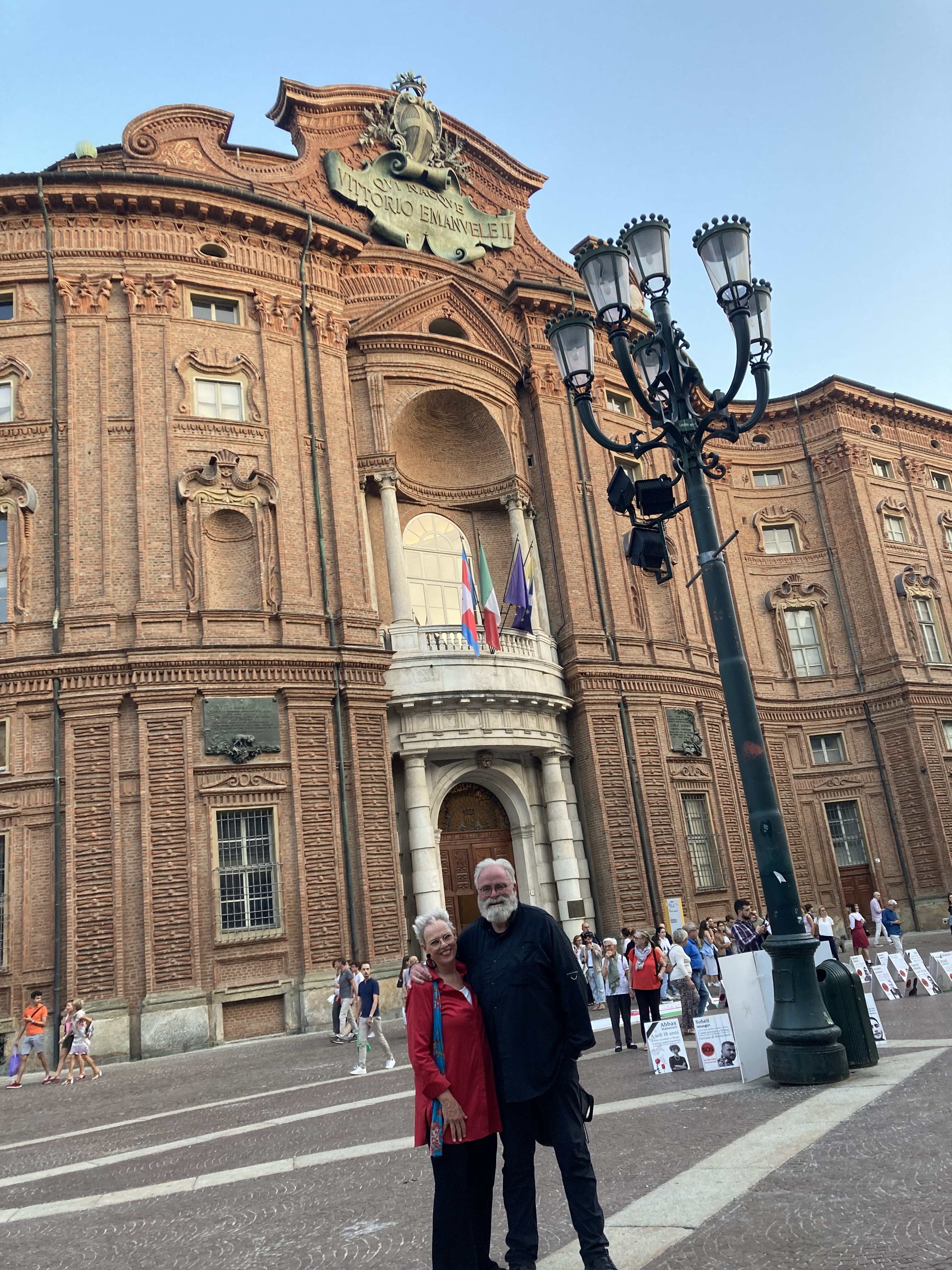

As we walked through the town, both of us were amazed at the number of monumental buildings and beautiful plazas. This is Palazzo Carignano, now a museum, but originally the private residence of the Princes of Carignano, aristocrats from the House of Savoy, the ruling family in this area.

Calvary Chapel Torino had arranged to show the film, The Jesus Revolution, about the 1960s revival at Calvary Chapel in Costa Mesa, to their congregation on Saturday night. Quite a few people showed up and everyone seemed to enjoy it. Since it was in Italian, Estie put on the English subtitles so we would know what was being said. Afterwards we walked back to our hotel and got to bed after 11:00 pm, really late for us.

In the morning, I still woke up early and went walking around before breakfast. Here are a few tidbits. This is a replica of the Mole (mo-LAY), one of the signature buildings in Torino. The Mole was originally built as a synagogue, but now houses the museum of Italian Cinema. This replica is in the Lego store window, along with a Lego Donald Trump. Why? I'm not sure. 

This is the train station, just as the sun came up, mostly because I thought it looked cool.

This fountain represents the Po River and it's female equivalent, the Dora, lies just on the other side of the gate that enters the CLN square. Since the female fountain is holding out an apple to the male on the other side, I was certain that they represented Adam and Eve, until I did a little research. 

This picture, looking down Via Roma to the Porta Nuova train station, gives you a feel for the Torino street plan. Notice that the walkways on each side are covered. These porticos house all manner of high-end shops.

There were very few people on the street, and it was amusing to see one of them stop and take a picture of the Prada window display.


We met up with Estie and her roommate, Amy Rodriguez, who also works at Calvary Chapel Torino, for lunch at Eataly.


Kathy and I were not that hungry, because of our large hotel breakfast, so we split a pizza and a pear salad, which was nice. Eataly is a large gourmet shopping center with several restaurants attached. It is quite popular.

Last week Calvary Chapel moved into a new building, which they rent from another evangelical church. Since they are sharing a building, Calvary Chapel holds its weekly church service in the evening on Sunday. We all walked over after lunch so the ladies could get set up.
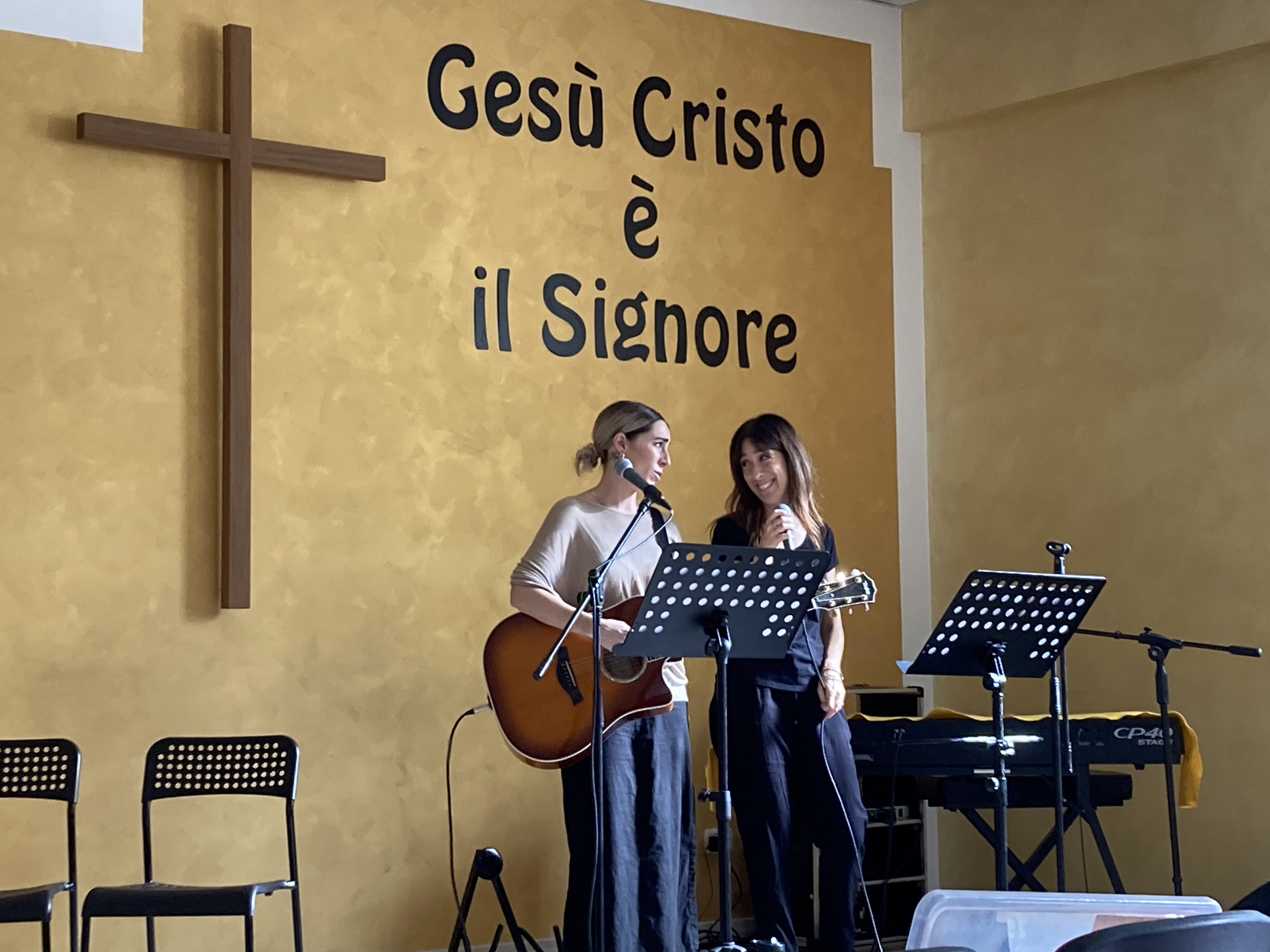

This Sunday's worship team, Denae Downs (the pastor, David Downs' wife) and Sofia spent time rehearsing the songs for the service. They both have beautiful voices and I shot a few videos of the rehearsals.
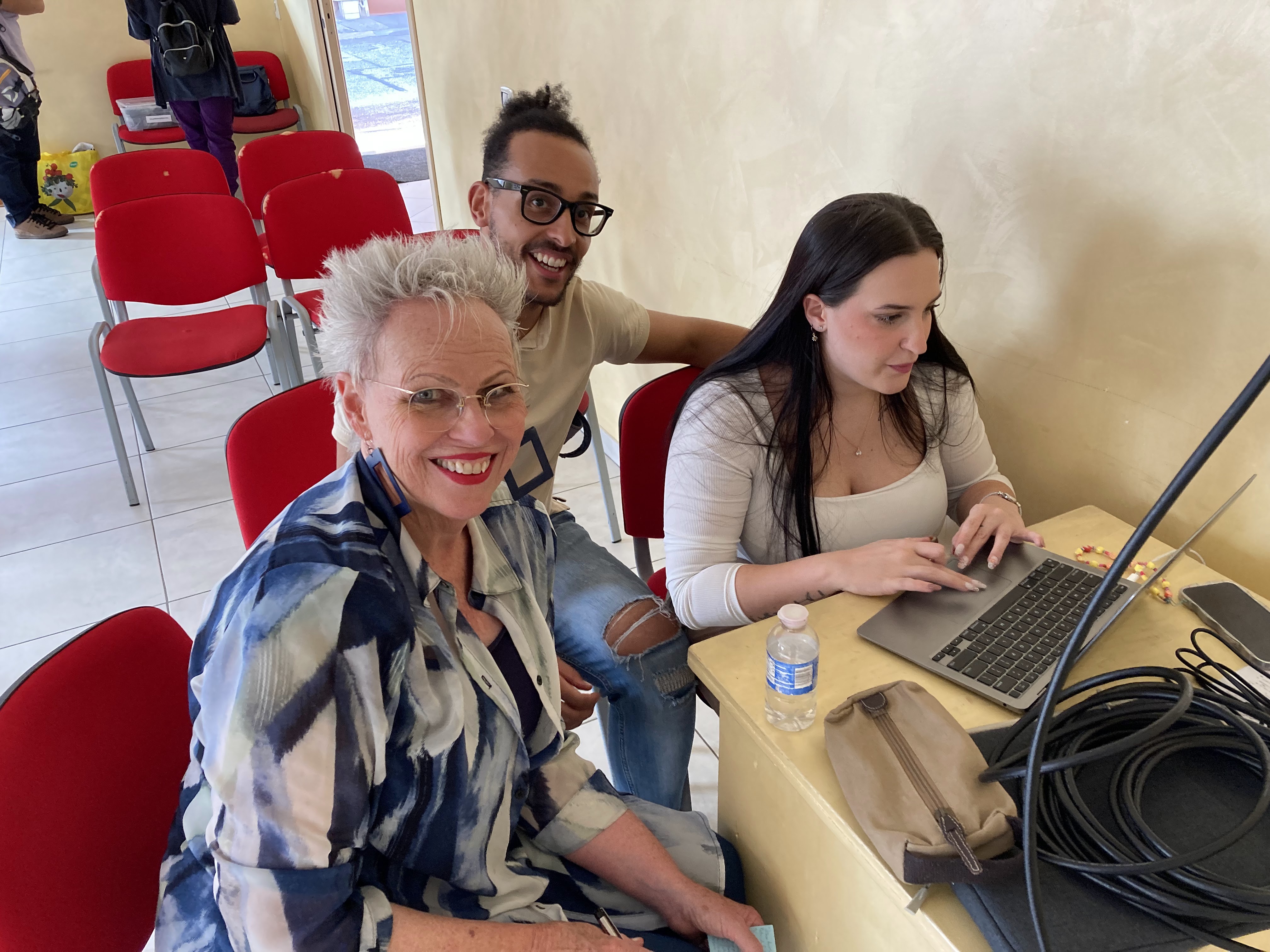

Here is Kathy with Mario and Laura as they set up the computer for the projector during the service.

Estie helped Sam with the sound check (while I just wandered around taking pictures).

Finally, around 4:00 pm, everyone started arriving for the service, which started at 5:00 pm.

One of the things that Kathy and I love to do when we're traveling is to meet up with the different Calvary Chapels in the areas that we visit. We had planned to go out to dinner with David and Denae to hear all about the ministry in Torino. Instead, David got stuck in Israel, where he was teaching a block class at the Bible School when Hamas invaded Israel this week. As a result, he wasn't able to get a plane out of the country, and so Kathy and I had the pleasure of sharing our testimonies with the congregation.

Since they had just seen the Jesus Revolution film, which is Greg Laurie's story about how God used Calvary Chapel in his life, we found it easy to talk about how God worked in our lives. Afterward, everyone came up for a picture, which we really treasure.

As part of their evangelistic efforts in Tornio, the church has been partnering with a group called Steiger, an international youth ministry. The group had a training session over the weekend, and the girls stayed with Amy and Estie. When Amy told them about our testimony, they wanted to get together in the morning before we left for Milan, and talk.

We checked out of our hotel early and spent all morning in the train station cafe, sharing our stories and hearing about what God was doing with their ministry. Kathy and I were totally blown away. It reminded us so much of Shiloh, and seemed so much like an answer to our prayers. We were so engrossed that we didn't want to leave. 

Finally, though, 11:00 am came and we had to hurry a bit to catch our train to Milan. Tomorrow we'll see Leonardo's Last Supper, and the next day we'll head up to Lake Como for the day. Something tells me, though, that the last two days will be the ones we'll remember. 

Friday, October 6, 2023

Thursday & Friday in Ferrara

Thursday morning we got up early, made ourselves breakfast, packed and were out the door before 8:30 am, to catch our 9:30 am train to Ferrara. While our apartment in Trieste was nice, both of us missed having breakfast prepared for us.

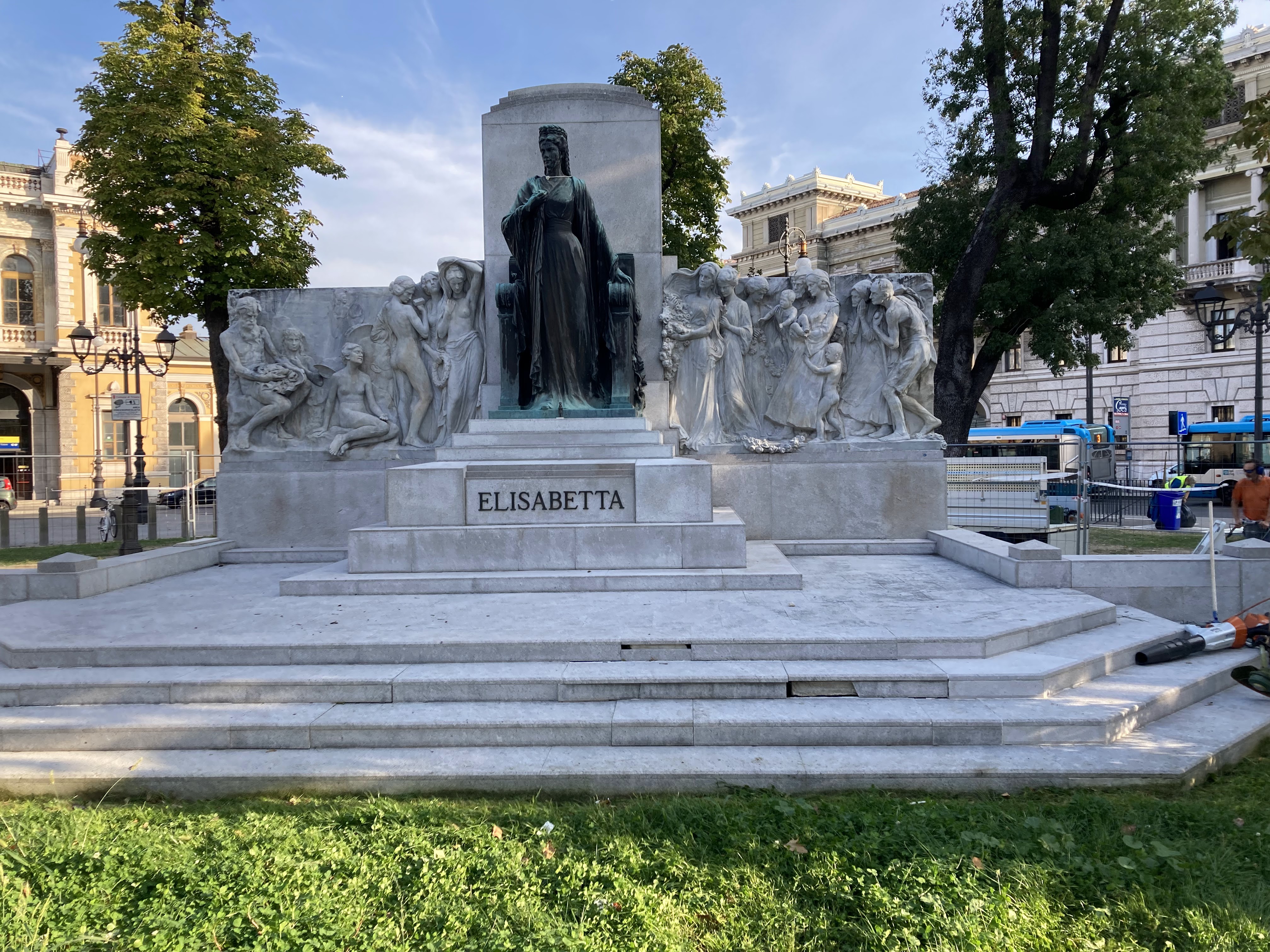
We got to the station before 9:00 am, and since we had a half hour to spare, we sat in the Piazza del Liberta across the street and admired the monument to Elisabetta (Sissi) the wife of Franz Joseph, the Emperor of Austria. She had a tragic life. Her son was a murderer-suicide (as told in the 1968 film Mayerling, where she was played by Ava Gardner). Romy Schneider also played her in the much more upbeat 1955 film Sisi. She was later stabbed to death by an Italian anarchist.

Our train from Trieste to Venezia Mestre, where we had to change trains, was almost empty, took two-and-a-half hours, and cost us 10E apiece. The train from Venezia Mestre to Ferrara was completely full. We had to pile our luggage in the aisle because there was no room in the overhead. Fortunately, this train was less than an hour, although it cost us 30E apiece. When we finally got to Ferrara, a little after noon, we caught a bus to our hotel, intending to drop off our luggage. We are staying at the Hotel De Prati, one of those characteristic, family-run European hotels that seem to be disappearing. We were delighted to find our room already made up, with a large terrace to relax on.

Since we hadn't eaten, instead of relaxing on the terrace, we walked a block to the center of the old town and had lunch at the Osteria Savonarola, right in front of the statue erected to him. (I actually wondered why there was a statue of Savonarola in Ferrara, instead of Florence. It turns out he was born in Ferrara, and is still revered here, unlike in Florence, where he is considered a bit of a villain.) 

For lunch I had the daily "menu" consisting of traditional Ferrara dishes, including cappelacci di zucca (a pumpkin-filled, hat-shaped pasta pouch, brushed with sage and butter), salama da sugo (stewed pork sausage with mashed potatoes, the favorite of Ferrara's Lucrezia Borgia), and pasticcio di maccheroni (and oven-baked macaroni pie). Kathy had lasagna and grilled vegetables. (One anonymous commenter on our blog noted that Kathy seems to be eating much healthier than I do.) Once again, I forgot to take pictures. Sorry.

After lunch we went back to our hotel and I took a nap until almost 5:00 pm when we got up and walked into town for some gelato and sight-seeing. The main structure in the center of town is Castello Estense, which is, indeed, a castle with a moat and a drawbridge. It was built in 1385 to protect Nicolo II d'Este from the irate citizenry who were up in arms over tax increases.

In the 1400s it became the family's permanent residence. It was here that Duke Nicolo III d'Este had his son Ugo and young second wife Parisina beheaded when he discovered their affair. This was the inspiration for Robert Browning's My Last Dutchess, Byron's poem Parisina, and a pair of operas.

After wandering around for a few hours we went back to our hotel and were in bed by 8:00 pm

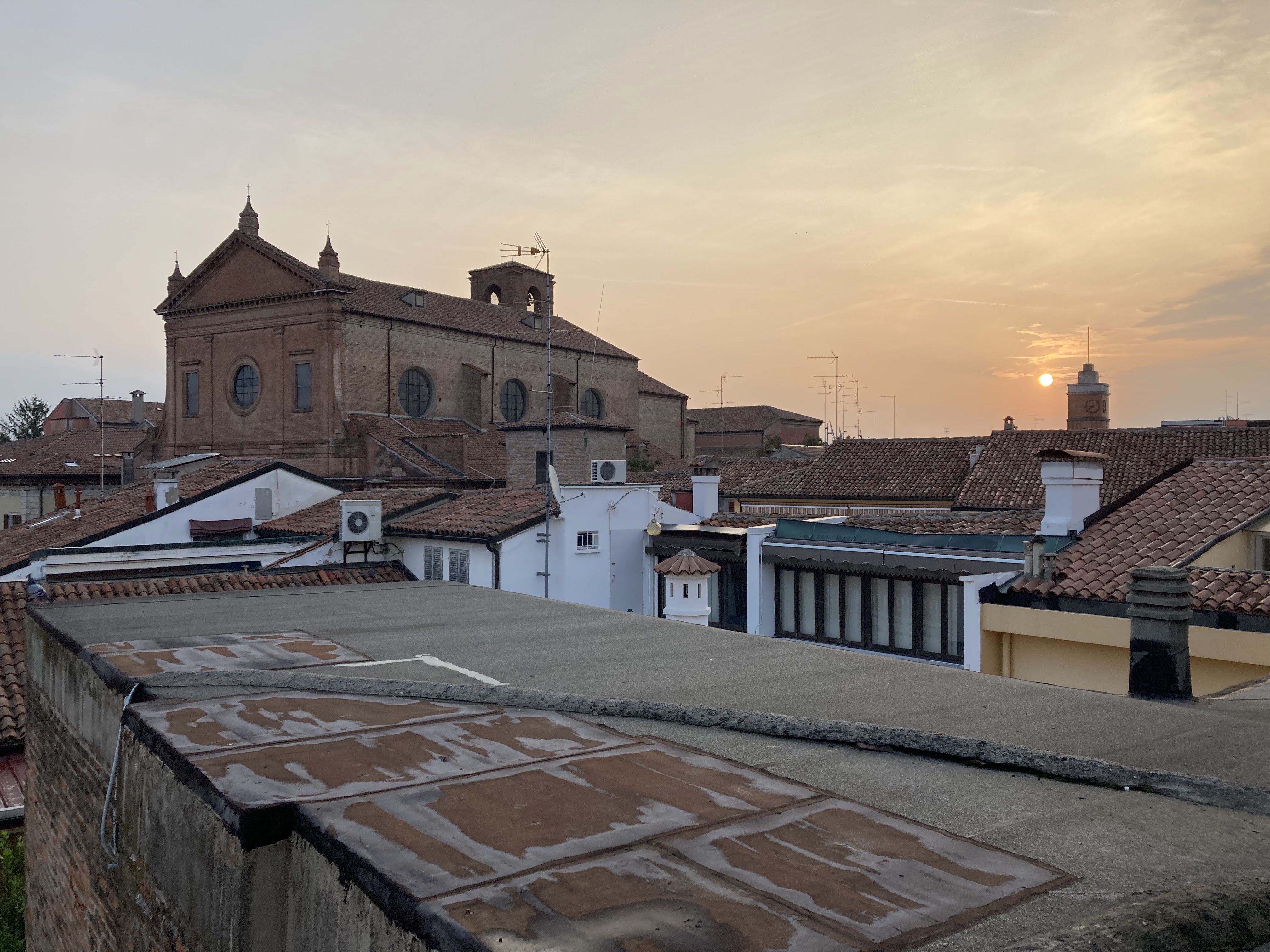
Most of this trip I've been waking up before dawn. Today, instead of exploring the town I just sat on the terrace with a cup of (decaf) Cappuccino, and watched the sun come up over Ferrara. I had originally planned another day trip for Friday, to Ravenna, to see the famous Byzantine mosaics. As Kathy and I went over the travel plans, though, both of us realized we were ready for a rest. Instead, we decided to look into renting bikes and riding around Ferrara's walls.

When we got downtown around 9:00 am we discovered that the entire town had been turned into an outdoor clothing market. I've read about "market days" in different guidebooks, but it was really amazing to see how many vendors there were. All of the vendors seemed to be selling clothing; perhaps the fruits and vegetables, like those we saw in Ljubljana, are sold on a different day.


To find a bike to rent I used Google Maps. The highest rated bike rental shop was the Todisco Brothers, right in the center of the city. When we got there, though, we found the place locked up (despite the latest review being only four days ago.) Back in Google Maps, I found another shop that was close by. Again, when we got there, we couldn't find it. We went into a bar, and asked, and were told that it was inside the hotel across the street. From there it was easy; for 6E, we each got a lovely orange bike to ride around the town.


There are bike paths all around the city, a 12.5 mile ride. For a portion of the way we were able to ride on top of the walls. Only Ferrara and Lucca in Italy have such complete walls.


The walls are quite thick. At lunch we saw an illustration of how they appeared in the 1800s, with a moat surrounding the entire town, with bridges and gates to get into town, such as this one. Most of the gates are gone, and the moat is now just a low-lying grassy area surrounding the walls. You can imagine from the terrain what it must have looked like when it was filled with water.


On Thursday night, while we were walking around the city, we made a lunch reservation at the restaurant from which we'd been turned away at lunch. My Lonely Planet guidebook gave the Trattoria da Noemi a glowing recommendation. Our reservation was at 1:00 pm and we were finished our bike ride at noon, so we indulged in my favorite European recreation; we got a table on the main square and people-watched for an hour.


Yesterday I'd tried all of the traditional dishes of Ferrara. Today I wanted to try something different. For starters, we had fried zucchini flowers and mushrooms. For our main (pasta) course, I had tortellini filled with gorgonzola cheese and walnuts, while Kathy had beef ravioli with cream sauce. We shared a salad. (See, I can eat healthy too.) For desert we had Zuppa inglese, or "English Soup". Lonely Planet was right; the food was really good.


After lunch, we headed back to the hotel for another nap. I wonder if I can adjust my schedule once I go back to OCC to take a nap every afternoon. Now that I have finished updating the blog, we're going out for gelato. In the morning we will catch the train for Torino where we're looking forward to visiting David and Denae Downs and Estie Martin and the rest of their Calvary Chapel Torino family.

Wednesday, October 4, 2023

Monday in Bled, Tuesday in Trieste, Wednesday in Aquileia


On Monday we took the bus to Lake Bled, a little more than an hour from Ljubljana. These are "local" buses, so the time varies. On our trip from Ljubljana, the bus visited every bus stop, so it took about an hour and a half. On the way home, it went directly to Ljubljana, and so it only took an hour.

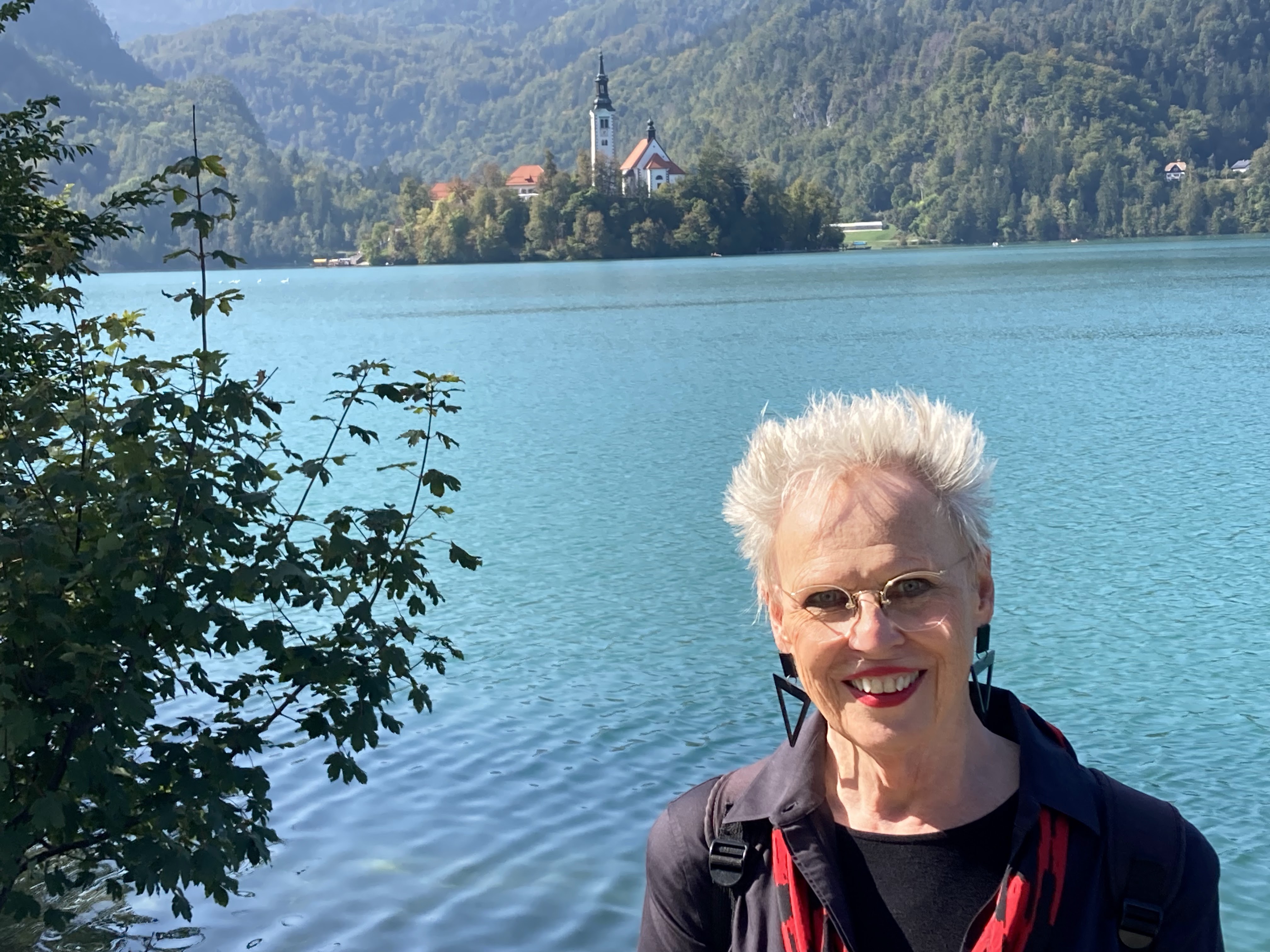
In the center of Lake Bled is a single island with a church that is internationally popular for weddings. (These were prohibited during Communist times, and the first one was conducted clandestinely in 1989.) Going up to the church, there are 99 steps and the tradition is for the groom to carry the bride up the steps to prove he is worthy of marriage. Apparently about 4 of 5 couples make it all the way. No statistics on how many of their marriages make it all the way, though.

Towering over Lake Bled is Bled Castle, build by the Holy Roman Emperor, Henry II in 1006. Today, it's a popular tourist attraction, but not popular enough for Kathy and I to make the hike up there. I took this picture because it reminded me of my brother Gary, who is an avid paddle-boarder.

One of the most popular ways to get out to the island is via the traditional wooden, hand-rowed boat known as a pletna, first used at the end of the 14th century. You can see one over Kathy's shoulder.

We got back to Ljubljana around five pm and walked down to the river for dinner. We had dinner at another restaurant recommended by Luckta named Sisi. The food was fine, but, perhaps, not as good as last night. I had Tandoori chicken and Kathy had ravioli, but I was so tired, I forgot to take a picture. It was disconcerting to be the only people eating in the restaurant.

After dinner, we crossed the river to get some gelato (pear and thyme along with sour cherries and banana). Along the way, we passed by a park with hundreds of people listening to a band, and getting pretty excited. It was dark now, and by the time we got to the main plaza, it was completely filled with people, along with a few policemen. Everyone looked very expectant like they were waiting for something to happen. We decided to head back to the hotel.

We had no longer gone one-hundred yards, when the whole city burst into fireworks; not just from one place, but from what seemed like every street corner and rooftop. When we got back to the hotel, we asked at reception, and found that it was a hyper soccer fan group named the Ljubljana Green Dragons, who were celebrating their thirtieth anniversary.

Tuesday In Ljubljana and Trieste

Tuesday morning was misty once again and I set out to see a little more of the city before breakfast. Looking across the Ljubljanica river, which bisects the town, to the domes of St. Nicholas Cathedral, the Ljubljana castle is hidden behind it in the mist.

Over by the cathedral, I watched the shopkeepers setting up for the daily produce market, and, along the river bank, I shared the sidewalks with the café owners using leaf blowers to clean the sidewalk and blow the debris a little further down-river where the owner of the next establishment took over. Circling the cathedral I admired the bronze doors. They reminded me a little of the ones on the door of the baptistery in Florence. When I looked them up, however, I found that they were quite modern, added in 1996 to commemorate Pope Paul II's visit and to celebrate the 1250th anniversary of Christianity in Slovenia.

Back in the room after my walkabout, Kathy and I packed and went down to breakfast. After breakfast, though, we realized that we still had several hours before our bus left at 2:00 pm. Leaving our luggage in the hotel we decided to visit the castle on the top of the hill. (We took the funicular; no more long climbs for us.)

The castle is relatively new and we weren't really interested in touring it. Nonetheless, our funicular ticket let us visit several of the rooms, including the chapel and the penitentiary, which was used to house political prisoners and later, Italian prisoners of war. There was even an art exhibit by a popular editorial cartoonist, which we both enjoyed. I'm standing next to "Mass Tourism", wondering if I can detect a resemblance.

Down off the hill, we had to visit the famous Dragon Bridge, and get a selfie. Mass tourism indeed!

We still had a few hours before our bus left, so we did my favorite thing in Europe: we got a table at a riverside café, and just watched the world go by. 

Our bus was more than a half-hour late (just like our train into Ljubljana) and we didn't get into Trieste until after four. Instead of a hotel, we stayed at an apartment, we had to provide our own breakfast, so we walked to the store to get some supplies. I was happy to find sugar-free orange and lemon soda once again. We were too tired to walk around town, or even to go out to dinner. Instead, we made ourselves a picnic in our room and fell fast asleep by 8:00 pm.

Wednesday in Aquileia


After a good night's rest both of us were ready for another adventure. About fifty miles from Trieste lies the small village of Aquileia, which, in Roman times, was a river-sea port, and was the fourth largest city in the Empire. Augustus made it the capital of the province of Regia Venetia et Histria, and he personally met with Herod the Great here. To get there, we had to take a train and then a bus. We made it by about 10:00 am, and spent a half-hour walking around a current archeological excavation.


Aquileia was one of the first Italian cities where Christianity was openly practiced, evangelized, according to tradition, by the Gospel writer Mark. The Basilica was built by Bishop Theodore in 313, just after Constantine issued the Edict of Milan. Both St. Ambrose and St. Jerome spent time here. In 452, Attila the Hun sacked the city, with many of its inhabitants fleeing south to the lagoon in Grado, and others fleeing west, where they found refuge in the Venetian lagoon. The current basilica was built around 1031 by the Patriarch Poppo in the Romanesque style. 


When Poppo rebuilt the basilica, he thought that Theodore's floor was old-fashioned, so he covered it up with red and white tiles, preserving it for its rediscovery in the 20th century. Theodore's mosaic floor is the largest early-Christian mosaic anywhere in the world.


There are glass walkways down each side of the church, and you can peer over and see the mosaics from a few feet away. This is the Good Shepard.


This is supposed to be the cockerel of Christ announcing the light of the world to the tortoise of darkness, but I don't know. Perhaps the guidebook authors were overthinking things. On the left side of the church, in the basilica's processional hallway, the modern-day excavators have uncovered the mosaic floors of the 1st century Roman houses that predated the 4th century basilica. It's really fascinating, and I'm sure it would be much more famous if it wasn't so far from the more popular tourist destinations.


The 14th century crypt, under the alter, is covered with frescos, illustrating St. Mark's visit, the early bishops, and so on. There are also some bones of different martyrs enclosed in reliquaries. 


By noon were were frescoed out, and went looking for lunch. We ate at the Hotel Patriarchii, right next the basilica. Kathy had the traditional ravioli of Frulia Venzia Giulia, (the north-east corner of Italy), called cjarsons. I had spaghetti Bolognese. Both were delicious. For our secondi, we split a main course of frico, fried cheese and potatoes, very similar to Rösti in Switzerland. I forgot to snap a picture.


After lunch we caught the bus to the Cervignano del Friuli train station, and, a half-hour later the train back to Trieste. We got back around 5:00 pm and were really tired. Despite that, we decided to stroll down the waterfront, where everyone is setting up for the 55th Barcolana regatta this Sunday.  


On the way back to our apartment, we made a quick stop at Gelato Marco and took a final selfie in front of the ancient Roman amphitheater, which is a block from our rooms. Then, we hit the sack. Tomorrow, we're heading out to Ferrara, where we'll see the Ravenna Byzantine mosaics.